The Advantages of 3D Laser Scanning in Construction
3D laser scanning is revolutionising the M&E Building Services industry by providing precise, high-resolution 3D models of physical spaces and structures. As this technology becomes more accessible and affordable, its applications are expanding across all stages of construction projects from initial design and planning to final inspections and ongoing maintenance. This article will explore the various ways 3D laser scanning is being utilized in construction, highlighting the numerous benefits it offers in terms of accuracy, efficiency, and safety.
Introduction
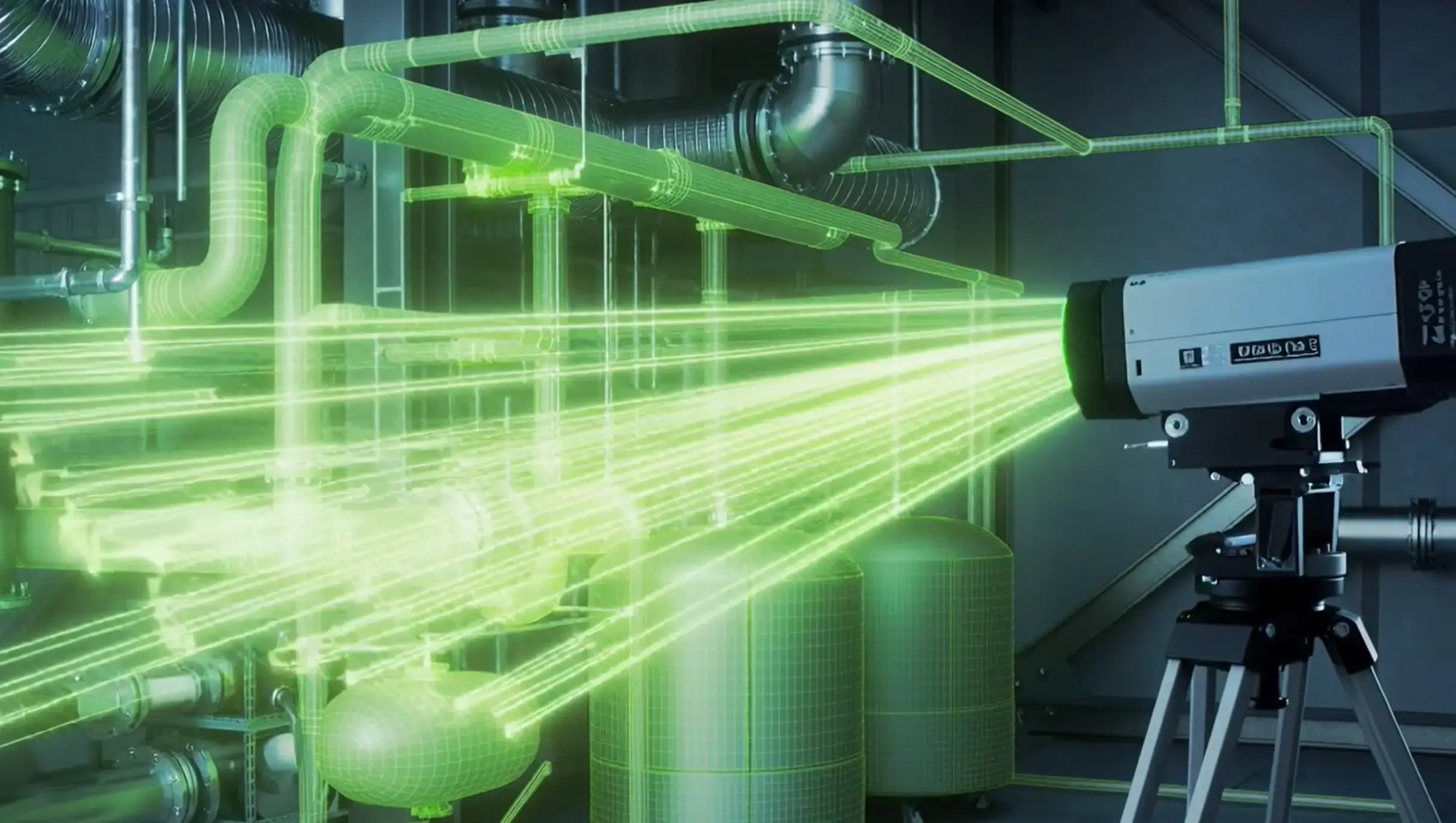
3D laser scanning is quickly becoming a staple in the construction industry due to its ability to capture accurate, detailed, and comprehensive digital representations of physical spaces occupied by building services. This technology employs laser beams to measure distances and generate a “point cloud” of data points, which are then processed into a 3D model. The applications of 3D laser scanning are extensive, ranging from as-built documentation and quality control to safety enhancements and beyond. As construction projects grow in complexity and demand, the need for such precise technology becomes increasingly apparent.
Key Uses of 3D Laser Scanning in Construction
As-Built Documentation
What Is As-Built Documentation? As-built documentation includes detailed drawings or digital models that accurately depict the final construction of a building or structure, incorporating all changes made during the construction process. These documents are essential for future reference, maintenance, and legal compliance.
How 3D Laser Scanning Improves As-Built Documentation:
- Exceptional Precision: Traditional methods rely on manual measurements, which can be time-consuming and error-prone. In contrast, 3D laser scanning captures millions of data points with sub-millimetre accuracy, ensuring the final documentation is an exact representation of the built environment.
- Time Efficiency: The speed of data collection with 3D laser scanners is unmatched. Tasks that might take days or weeks manually can often be completed in hours with laser scanning, reducing project timelines and minimising disruptions.
- Thorough Data Collection: 3D laser scanning captures not only visible elements but also hidden or hard-to-reach areas, such as ceiling void spaces. This comprehensive data collection is invaluable for creating detailed as-built documentation.
Uses of As-Built Documentation:
- Maintenance and Repairs: Accurate as-built documentation is crucial for facility management, enabling precise maintenance, repairs, and upgrades without guesswork.
Applications in Design and Planning:
- Site Analysis: Before construction begins, it is essential to understand the existing conditions of the site. 3D laser scanning provides detailed data that can be used to analyse the services and plan the project accordingly.
- Design Validation: As the project progresses, 3D laser scanning can be used to validate that the installation is proceeding according to plan. Any discrepancies can be identified and corrected before they lead to significant issues.
- Stakeholder Collaboration: The detailed models produced by 3D laser scanning can be shared with all stakeholders, facilitating collaboration and ensuring that everyone is on the same page.
Project Monitoring and Management
Keeping Construction Projects on Track:
One of the most significant challenges in construction is keeping projects on schedule and within budget. 3D laser scanning provides a powerful tool for monitoring and managing construction projects, ensuring that they stay on track from start to finish.
How 3D Laser Scanning Aids Project Management:
- Real-Time Progress Tracking: By regularly scanning the construction site, project managers can monitor progress in real-time. This allows for the early identification of any delays or issues, enabling corrective action to be taken before they impact the project’s timeline.
- Detailed Documentation: 3D laser scanning provides a comprehensive record of the construction process, from the initial site survey to the final inspection. This documentation is invaluable for resolving disputes, verifying compliance, and ensuring that the project meets its goals.
- Cost Control: By providing accurate data about the construction progress, 3D laser scanning helps to control costs and prevent budget overruns. Any deviations from the plan can be identified and addressed before they lead to costly delays or rework.
Why Use BIMdept. Ltd for your M&E scanning
We use:
- State-of-the-Art Technology: BIMdept Ltd utilises cutting-edge laser scanning technology to capture highly accurate and detailed point cloud data, ensuring precision in every project. Because we also work within the building services industry we know which areas require additional scan data to achieve a fully accurate MEP point cloud model.
- BIM Expertise: With a strong background in MEP BIM, BIMdept Ltd provides customised solutions that seamlessly integrate with Revit-based 3D models, enhancing the overall project workflow.
- Efficiency and Speed: Our advanced scanning process allows for rapid data collection, minimizing disruptions and significantly reducing project timelines, helping you stay on schedule and within budget.
- Thorough Documentation: We deliver comprehensive and precise documentation of existing services, which is crucial for maintenance, repairs, and future modifications.
- Client-Focused Solutions: BIMdept Ltd is dedicated to offering tailored solutions that cater to the specific needs of each project, regardless of its size or complexity.
By partnering with BIMdept Ltd, clients can ensure their MEP scanning projects are handled with the utmost precision, efficiency, and expertise.